


Connect Kids

Blog

Blog

5 Simple Ways to Encourage Your Child’s First Words at Home

Hearing your child say their first words is an exciting milestone! While every child develops at their own pace, there are many easy, play-based ways to support early communication right at home. Here are five simple strategies you can start using today. Follow Your Child’s Lead Instead of directing the play, join in with what your child is already interested in. If they’re pushing a car, say “go!” or “vroom!” If they’re looking at bubbles, model “pop!” Children are most motivated to communicate during activities they love. Use Simple, Repeated Words Choose short, everyday words and repeat them naturally during routines—words like up, more, go, open, or bye-bye. Repetition helps your child hear the same sounds again and again, making it easier for them to try saying the word themselves. Pause and Wait After you say something or offer a choice, pause and give your child time to respond. This small moment of silence encourages them to fill in the gap—maybe with a sound, gesture, or word. More Modeling, Less Quizzing Instead of asking “What’s this?” over and over, model the word yourself: “Ball!” “Big ball!” Children learn more from hearing rich, meaningful language than from answering questions. Build Words into Daily Routines Routines offer predictable moments that help children connect words to actions. During meals: “more,” “eat,” “yum.” During bath time: “wash,” “splash,” “wet.” Getting dressed: “sock,” “on,” “off.” The more your child hears language in context, the more likely they are to use it. Remember, consistent use of these strategies is key to seeing meaningful progress.

Blog

10 Early Signs Your Child May Benefit From Speech Therapy

Every child develops at their own pace, but early speech and language skills lay the foundation for learning, social interaction, and confidence. If you’ve noticed your child struggling to communicate or you’re simply unsure what’s typical, you’re not alone—many parents have these questions. Here are 10 early signs that your child may benefit from a speech and language evaluation. Limited Words by 18 Months By around 18 months, many children say at least 10 words and are adding new ones regularly. If your child is using very few words or isn’t showing steady growth in their vocabulary, it may be worth checking in. Not Gesturing or Pointing Gestures like pointing, waving, or reaching to be picked up are early communication skills. A lack of gestures can signal that your child needs extra support. Trouble Understanding Directions If your child struggles to follow simple instructions (like “get your shoes”), they may be having difficulty with receptive language—how they understand words and sentences. Limited Eye Contact or Joint Attention Look for moments where your child shares attention with you, like pointing out a toy or showing you something exciting. Limited shared attention can affect language learning. Frustration or Frequent Tantrums During Communication Children who can’t express themselves often show frustration. Speech therapy can help them communicate more easily and confidently. Difficulty Producing Speech Sounds If your child is hard to understand compared to peers their age, or if they consistently leave off or substitute certain sounds, an SLP can help determine why. Not Imitating Sounds or Words Imitation is a key step in language development. If your child doesn’t copy sounds, gestures, or words, it may be worth exploring further. No Babbling by 12 Months Babbling (like “baba” or “dadada”) is an important milestone. Little to no babbling can be an early indicator of a delay. Loss of Previously Used Skills If your child stops using words, gestures, or communication skills they once had, reach out to a professional right away. You Have a Gut Feeling That Your Child May Need Extra Support Parents know their children best. If something feels off, trust your instincts. Early support makes a big difference. When to Seek Support A speech-language evaluation is gentle, play-based, and tailored to your child. The goal is simply to understand where your child is and how to support their growth. If you’re concerned about your child’s communication, reaching out early can help them thrive.

Blog

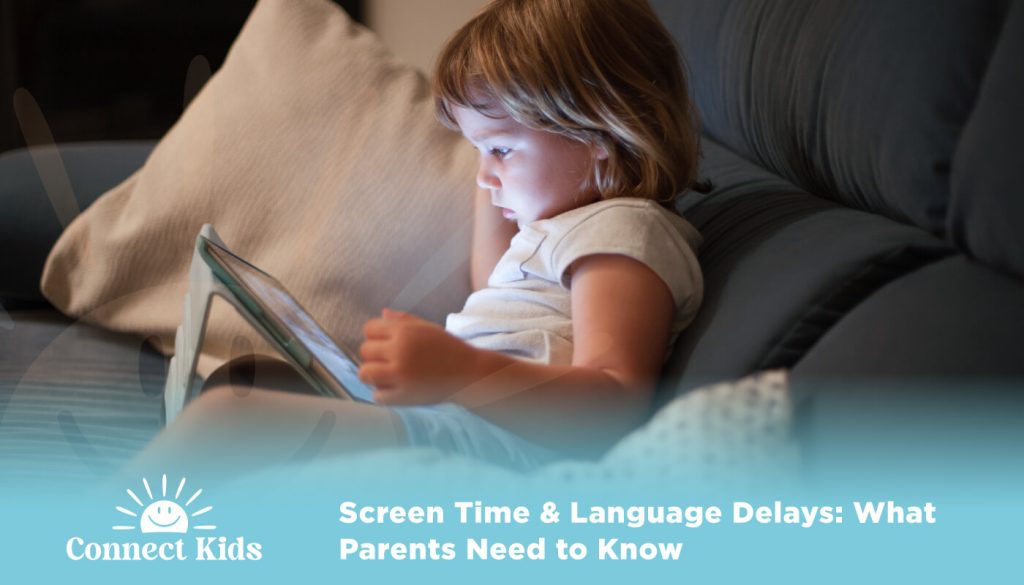
Screen Time & Language Delays: What Parents Need to Know

In today’s world, screens are everywhere—phones, tablets, TVs, and even toys. While technology can be helpful, research continues to show a connection between high screen time and delays in early language development, especially for toddlers. How Screen Time Impacts Language Language grows through real-life interaction—face-to-face play, shared attention, and back-and-forth conversations. When screen time replaces these experiences, children may miss opportunities to build vocabulary, social communication, and play skills. Studies show that: Increased screen use is linked to fewer spoken words in young children. Background TV can reduce the amount of language parents use at home. Interactive communication is far more effective for learning than passive watching. This doesn’t mean screens must be eliminated—it simply means young children need limits and adult involvement. It’s important to remember that you are your child’s most powerful communication model. Be mindful of how often you’re on your phone, computer, or other devices when you’re with your child—face-to-face interaction is what helps language grow. American Academy of Pediatrics (AAP) Screen Time Recommendations: Children under 18 months: Avoid screen time, except for video chatting with family. Children 18–24 months: If parents choose to introduce screens, AAP recommends high-quality programming and co-viewing. Children should not watch alone. Sit with your child and talk about what you see on the screen to make it more of an interactive experience. Children 2–5 years: Limit screen time to about 1 hour per day of high-quality, educational content. Watch together whenever possible to help children understand and apply what they’re seeing. For all ages: Avoid screens during meals and within 1 hour of bedtime. Prioritize interactive activities like talking, reading, playing, and outdoor time. Simple Ways to Reduce Screen Time Create “tech-free” zones (kitchen table, car rides, bedtime routines). Offer engaging alternatives: books, blocks, pretend play, outdoor time. Set timers and clear limits around screen use. Model healthy screen habits—children copy what they see. (Source: American Academy of Pediatrics, Media and Young Minds Policy Statement)

Scroll to Top