

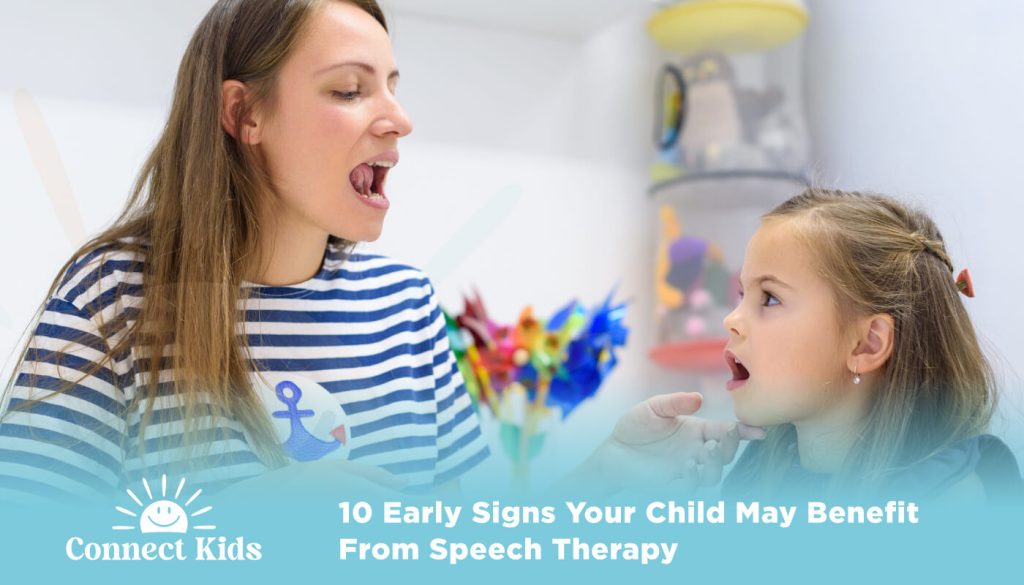
Every child develops at their own pace, but early speech and language skills lay the foundation for learning, social interaction, and confidence. If you’ve noticed your child struggling to communicate or you’re simply unsure what’s typical, you’re not alone—many parents have these questions. Here are 10 early signs that your child may benefit from a speech and language evaluation.
-
Limited Words by 18 Months
By around 18 months, many children say at least 10 words and are adding new ones regularly. If your child is using very few words or isn’t showing steady growth in their vocabulary, it may be worth checking in.
- Not Gesturing or Pointing
Gestures like pointing, waving, or reaching to be picked up are early communication skills. A lack of gestures can signal that your child needs extra support.
- Trouble Understanding Directions
If your child struggles to follow simple instructions (like “get your shoes”), they may be having difficulty with receptive language—how they understand words and sentences.
- Limited Eye Contact or Joint Attention
Look for moments where your child shares attention with you, like pointing out a toy or showing you something exciting. Limited shared attention can affect language learning.
- Frustration or Frequent Tantrums During Communication
Children who can’t express themselves often show frustration. Speech therapy can help them communicate more easily and confidently.
- Difficulty Producing Speech Sounds
If your child is hard to understand compared to peers their age, or if they consistently leave off or substitute certain sounds, an SLP can help determine why.
- Not Imitating Sounds or Words
Imitation is a key step in language development. If your child doesn’t copy sounds, gestures, or words, it may be worth exploring further.
- No Babbling by 12 Months
Babbling (like “baba” or “dadada”) is an important milestone. Little to no babbling can be an early indicator of a delay.
- Loss of Previously Used Skills
If your child stops using words, gestures, or communication skills they once had, reach out to a professional right away.
- You Have a Gut Feeling That Your Child May Need Extra Support
Parents know their children best. If something feels off, trust your instincts. Early support makes a big difference.
When to Seek Support
A speech-language evaluation is gentle, play-based, and tailored to your child. The goal is simply to understand where your child is and how to support their growth.
If you’re concerned about your child’s communication, reaching out early can help them thrive.