

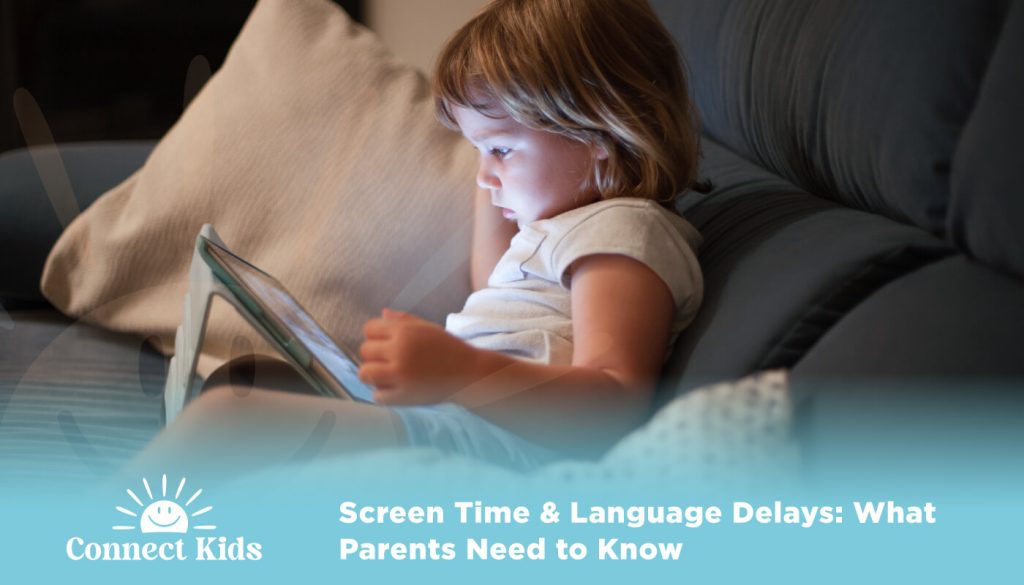
In today’s world, screens are everywhere—phones, tablets, TVs, and even toys. While technology can be helpful, research continues to show a connection between high screen time and delays in early language development, especially for toddlers.
How Screen Time Impacts Language
Language grows through real-life interaction—face-to-face play, shared attention, and back-and-forth conversations. When screen time replaces these experiences, children may miss opportunities to build vocabulary, social communication, and play skills.
Studies show that:
- Increased screen use is linked to fewer spoken words in young children.
- Background TV can reduce the amount of language parents use at home.
- Interactive communication is far more effective for learning than passive watching.
This doesn’t mean screens must be eliminated—it simply means young children need limits and adult involvement.
It’s important to remember that you are your child’s most powerful communication model. Be mindful of how often you’re on your phone, computer, or other devices when you’re with your child—face-to-face interaction is what helps language grow.
American Academy of Pediatrics (AAP) Screen Time Recommendations:
Children under 18 months:
- Avoid screen time, except for video chatting with family.
Children 18–24 months:
- If parents choose to introduce screens, AAP recommends high-quality programming and co-viewing. Children should not watch alone. Sit with your child and talk about what you see on the screen to make it more of an interactive experience.
Children 2–5 years:
- Limit screen time to about 1 hour per day of high-quality, educational content.
- Watch together whenever possible to help children understand and apply what they’re seeing.
For all ages:
- Avoid screens during meals and within 1 hour of bedtime.
- Prioritize interactive activities like talking, reading, playing, and outdoor time.
Simple Ways to Reduce Screen Time
- Create “tech-free” zones (kitchen table, car rides, bedtime routines).
- Offer engaging alternatives: books, blocks, pretend play, outdoor time.
- Set timers and clear limits around screen use.
- Model healthy screen habits—children copy what they see.
(Source: American Academy of Pediatrics, Media and Young Minds Policy Statement)